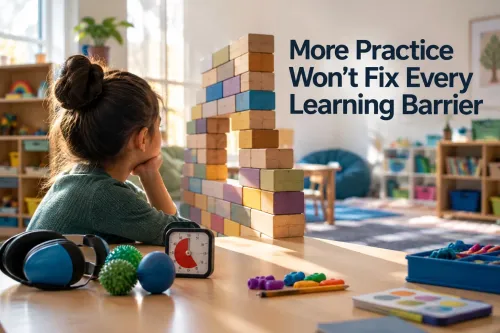

Hitting, biting, elopement, shouting, refusal and classroom disruption can arise from very different causes, including communication difficulty, sensory overload, pain, anxiety or academic mismatch. By the end, you will be able to match the behaviour pattern to a school setting, assessment, therapy or written support plan, then compare providers using measurable criteria.
Key takeaways
- Define the behaviour by its pattern, trigger, purpose and impact.
- Request a functional behaviour assessment before choosing an intervention.
- Compare mainstream support, resource rooms and specialised settings carefully.
- Choose therapy that practises skills in the classroom, not only in sessions.
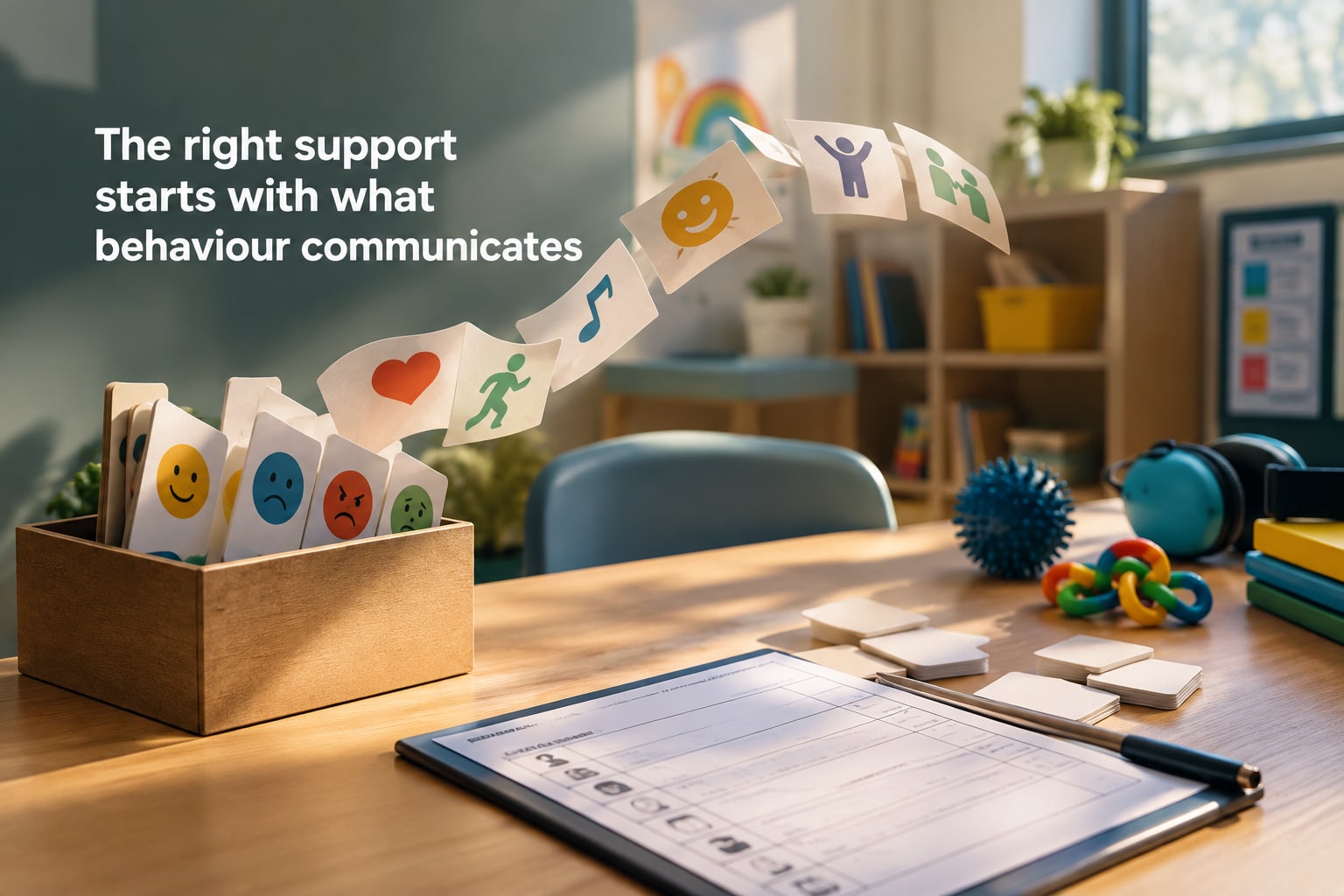
Start by identifying what the behaviour is communicating
A school behaviour problem is any repeated action that risks safety, blocks learning, or prevents participation in routines—not simply behaviour adults dislike. Look at the pattern and impact, rather than treating “difficult behaviour” as a diagnosis.
- Hitting, biting, kicking, or throwing objects
- Running away from the classroom or school area
- Refusing work, transitions, toileting, or basic instructions
- Shouting, disrupting lessons, or repeatedly leaving a seat
- Anxiety-driven avoidance, crying, freezing, or shutdown
- Toileting incidents that interrupt participation or signal distress
The visible action is not always the underlying problem. A child who tears up a worksheet may be escaping work that is too difficult, while a child who shouts may be requesting help without reliable speech.
Hitting can follow sensory overload, pain, poor sleep, fear, frustration, or an unclear expectation; leaving the room can reflect a need for movement or escape from noise.
Record what happened immediately before and after the behaviour: the task, demand, noise, people present, communication attempt, adult response, and what the child gained or avoided. Also check hearing, vision, medication, constipation, sleep, learning difficulty, anxiety, trauma, and communication needs.
This distinction helps you compare special education options for school behaviour problems in Pune and ask for school behaviour support for children in Pune that teaches a safer replacement skill instead of merely suppressing the action.
Use a functional behaviour assessment before choosing an intervention
Before choosing special education for behaviour problems, use a functional behaviour assessment (FBA) to map what happens before the behaviour, the observable action, and what happens after it. Repeated patterns show whether the behaviour helps the child escape difficult work, obtain attention or an item, communicate discomfort, or regulate sensory input.
The FBA should examine communication, learning demands, pain, sleep, anxiety and classroom expectations rather than rely on an ADHD, autism or intellectual-disability label.
| What happens before | Possible function | Replacement skill to teach |
|---|---|---|
| A difficult worksheet is presented | Escape or help-seeking | Hand over a “help” card or request a break |
| An adult attends to another child | Attention | Tap the teacher’s arm or use an agreed signal |
| A preferred toy is removed | Access or waiting difficulty | Request “more,” “turn,” or “later” |
| Noise, pain or crowding occurs | Sensory regulation or communication | Say “stop,” report pain, or use approved headphones |
The replacement must meet the same need safely. Reinforce it immediately and consistently, then check that staff are not accidentally rewarding hitting, shouting or refusal by removing every difficult task.
At a joint meeting, the family, teacher, special educator and relevant therapist should agree on:
- Two or three priority behaviours and their likely functions
- Prevention steps, replacement skills and crisis responses
- Data to record, who records it and a review date
Teach the replacement before a crisis, practise it during real classroom triggers, and revise the plan when the data shows no improvement.
Compare mainstream support, resource rooms and specialised settings
Choose placement based on the support your child needs, not on an ADHD, autism or intellectual-disability label. Ask whether the setting can provide suitable teaching, communication support, safety procedures and progress tracking every day.
| Option | What it provides | When it fits |
|---|---|---|
| Mainstream inclusion | Age-peer access with classroom accommodations, teacher support and coordinated therapy | The child can participate safely when adults adjust tasks, routines, communication and transitions |
| Resource room | Targeted instruction or regulation support for part of the day, with time in the mainstream class | The child needs extra teaching or behaviour coaching but can manage most classroom activities |
| Special class | A smaller group, adapted academics, closer supervision and consistent routines | The mainstream class cannot reliably meet substantial learning, communication or safety needs |
| Specialised school | Intensive special education, therapy and highly structured support throughout the day | The child needs a level of staffing, teaching or supervision unavailable in nearby schools |
A more restrictive placement is not a solution for behaviour that staff simply find inconvenient. Review it against learning, safety, relationships, participation and independence, because separation from age peers carries a cost. For families comparing special education options for school behaviour problems pune, ask how the school records triggers, replacement skills, incidents and progress.
When comparing special school behaviour therapy options, ask about staff-to-child ratios, de-escalation training, communication support, restraint safeguards, parent reports and a route back to less-restrictive support. Include the family, teacher, special educator and therapists in the decision.
Match the plan and therapy to the child’s actual need
The right support depends on the missing skill or trigger, not on a diagnosis or the label “difficult.” Choosing special education for behaviour problems starts with a joint review of learning, communication, sensory, medical, emotional and family needs.
- Use special education when academic demands, classroom structure or daily-living instruction exceed what mainstream teaching currently provides. Consider inclusion with accommodations, a resource room, special class or specialised setting according to the support the school can deliver consistently.
- Use behaviour therapy after a functional behaviour assessment identifies the purpose of hitting, refusal, shouting or leaving: teach a replacement such as requesting help, a break or attention, then reinforce it during real classroom triggers.
- Use occupational therapy or sensory support when noise, movement, clothing, motor demands or regulation difficulties precede the behaviour. Check pain, sleep and toileting concerns before treating sensory input as the cause.
- Use speech-language therapy when the child cannot understand instructions, express discomfort, answer, request or participate in conversation.
- Use counselling when anxiety, grief, trauma, emotional regulation or social conflict drives avoidance or outbursts.
- Request an Individualized Education Plan or equivalent support plan for measurable accommodations, teaching goals, communication supports and review dates.
- Add a behaviour intervention plan when behaviour is frequent, unsafe or disrupts learning; specify prevention, replacement skills, crisis steps and data on frequency, duration and intensity.
- Seek clinical referral for pain, seizures, sleep problems, medication concerns, sudden regression or risk requiring paediatric, psychological or psychiatric assessment.
A search for “special education for behaviour difficulties pune” should end with a plan shared by school, family and therapists, not therapy isolated from the classroom.
Choose a provider that can carry skills into the classroom
A provider is not ready for enrolment if its plan works only in a therapy room. Ask how staff will practise the replacement skill during the actual classroom trigger, then check whether the teacher will use the same prompt, break routine and reinforcement.
Compare special school behaviour therapy options using evidence rather than promises such as “we control behaviour quickly.”
| Provider question | Evidence to request | Warning sign |
|---|---|---|
| Staffing and safety | Staff-to-child ratio; de-escalation training; written rules for restraint or seclusion | Vague answers or restraint described as routine |
| Assessment | Records of frequency, duration, intensity, setting, triggers and consequences; a functional behaviour assessment | Only a diagnosis or label is used |
| Communication | Visual supports, speech or AAC access, and a plan for communicating pain, refusal or sensory overload | “The child must learn to comply” is the main strategy |
| Classroom transfer | Joint meeting with family, teacher, special educator and therapist; shared replacement skills and crisis steps | Therapy goals are not used at school |
| Progress | Baseline, measurable target, review date and copies of home-school data | “Better behaviour” is the only outcome |
| Independence | A plan to reduce prompts and return to less-restrictive support as skills improve | Permanent dependence on one-to-one support |
For school behaviour support for children in Pune, ask how outside therapists will coordinate with the teacher. For special education for behaviour difficulties in Pune, SAVI CHILD DEVELOPMENT AND RESEARCH CENTRE PVT LTD can be evaluated by these same questions: request sample data and meeting procedures, not a brochure.
Train caregivers to use the identical response at home.
Related services
Special Education provides personalized learning and developmental support for children with different learning needs and abilities. View service → |
ABA Therapy Applied Behavior Analysis (ABA) Therapy is a personalized approach that helps children develop important communication, social, learning, and... View service → |
Frequently asked questions
How do I identify what a school behaviour problem is communicating?
Track what happens before and after the behaviour, when it occurs, what the child gains or avoids, and how it affects safety, learning and routines.
Why use a functional behaviour assessment before choosing an intervention?
A functional behaviour assessment connects behaviour with triggers and its likely purpose, helping the team choose support instead of relying on punishment or guesswork.
How do mainstream support, resource rooms and specialised settings differ?
Mainstream support keeps the child in the regular classroom with accommodations and assistance; a resource room provides targeted instruction outside class; a specialised setting offers more intensive teaching, structure and therapeutic support.
How should special education and therapy be matched to a child’s needs?
Match the plan to the underlying need, such as communication, sensory regulation, learning, attention, emotional regulation or daily-living skills, then define measurable goals.
What should I look for in a school behaviour support provider in Pune?
Choose a provider that observes real routines, coordinates with teachers and caregivers, records progress, and practises strategies across therapy, home and the classroom.
Related services
Sensory Integration The early years of childhood are a crucial period for learning and development. View service → |
Oral Placement Therapy (OPT) focuses on improving the awareness, strength, coordination, and movement of the muscles involved in speech, feeding, and oral motor... View service → |