
Before a child begins therapy, the clinician needs more than a list of unclear words or a quick picture-naming exercise. You will learn what to prepare, what the assessment and sessions involve, how goals are measured, and when hearing, developmental or communication support should be coordinated with other professionals.
Key takeaways
- Record specific communication difficulties before the first appointment.
- Expect assessment of speech sounds, language, understanding, interaction, and oral-motor skills.
- Sessions combine play, guided practice, and strategies for everyday communication.
- Ask for measurable goals and home activities you can practise consistently.
What should you prepare before the first appointment?
Before the first appointment, write down when the concern began, which words or situations are difficult, how your child communicates wants or discomfort, and whether unfamiliar people understand them. Specific notes make the child speech therapy process more useful than saying “speech is delayed.”
Bring:
- Developmental and medical history, birth details when relevant, feeding history, previous therapy reports, school observations, and hearing-test results.
- Examples such as “uses gestures but no words,” “cannot follow a two-step instruction,” “repeats sounds,” or “speaks clearly at home but not in class.”
- Schoolwork, teacher notes, or a short home video if communication differs outside the clinic.
Record each language your child hears or uses. More than one language does not cause a language disorder, but the therapist needs to know the child’s exposure.
| Language | What to record | Example |
|---|---|---|
| Marathi | Daily exposure and use | Grandparents speak Marathi |
| Hindi | Where and how often it is heard | Hindi at home or with neighbours |
| English | Learning and speaking opportunities | English-medium school |
| Another language | People, settings and frequency | A caregiver uses Bengali |
If hearing has never been checked, ask whether the therapist recommends formal audiology testing. A child can respond to loud sounds yet miss speech sounds, so an audiologist—not everyday observation—must assess hearing. This information helps you understand what happens during speech therapy for children in Pune.
What does a speech therapy assessment for children examine?
A speech therapy assessment for children examines how a child understands, produces and uses communication, not just whether the child can name pictures. It usually begins with developmental, medical, hearing, feeding, school and language history, followed by caregiver discussion, play observation and structured tasks.
The therapist may assess:
- Understanding words, questions and one- or two-step instructions
- Vocabulary, sentence formation and expressive language
- Speech sounds, intelligibility, fluency and voice
- Turn-taking, eye gaze, gestures, play and social communication
- Oral-motor movements and feeding when chewing, swallowing, drooling or mouth control is a concern
| Speech-sound difficulty | Language difficulty |
|---|---|
| The child knows the message but produces some sounds inaccurately, making speech hard to understand. | The child has difficulty understanding messages or expressing ideas through words and sentences. |
The assessment also considers hearing-related communication, motor-speech problems, stammering, autism-related communication and broader developmental needs. If hearing has not been checked, ask whether the child needs a formal audiology appointment; responding to loud sounds does not prove that speech sounds are heard clearly.
Testing only in English can misrepresent a multilingual child. The therapist should collect examples from Marathi, Hindi, English and every other language the child uses, including each language’s exposure.
One visit is not always a complete picture. Fatigue, anxiety, sensory needs, unfamiliar adults and language familiarity can affect performance, so parent reports, home examples and school observations show how communication works across settings.
What happens during a typical speech therapy session?
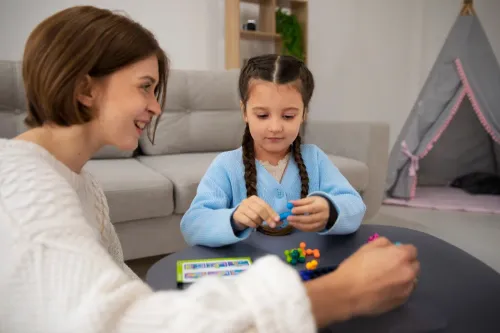
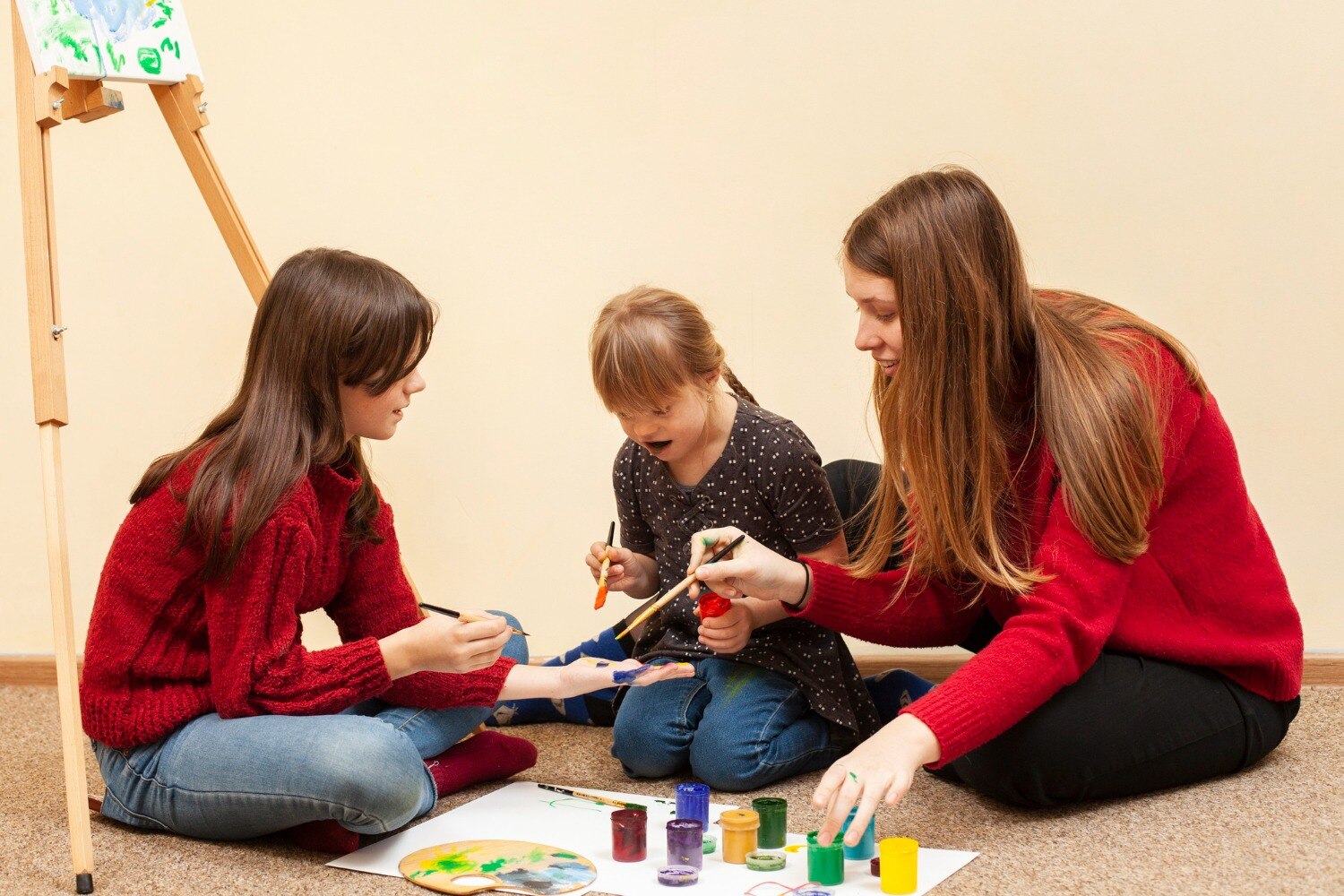
A typical speech therapy session for children in Pune starts with comfort, not testing. The therapist may use a familiar toy, book, movement activity or conversation before asking for answers.
Once the child settles, play is organised around a target: requesting, choosing, following a one- or two-step direction, answering, taking a turn or practising a speech sound.
The therapist creates communication opportunities through:
- Picture cards, books, gestures, modelling, pauses, repetition and turn-taking.
- Choices, such as “car or ball?”, so the child has a reason to communicate.
- Language expansion, changing “car” into “red car” and waiting for the child to initiate.
- Parent coaching for meals, dressing, travel and play.
For speech sounds, the clinician identifies the error pattern, teaches a tongue, lip or jaw placement cue, and practises the sound from a syllable or word toward phrases and everyday speech. Repeating a difficult word without purpose is not the goal.
| Target | What the therapist practises | What comes next |
|---|---|---|
| Speech sound | Placement, movement and accurate production | Syllables, words, phrases and conversation |
| Language | Requests, choices, vocabulary and sentence expansion | Functional communication in daily routines |
| Social communication | Eye gaze, turn-taking and responding | Longer, more flexible interaction |
The session usually ends with a practical home activity and a record showing what the child did independently, with a prompt or not yet.
How are goals and treatment adapted to each child?
The child speech therapy process changes with age, current ability and the communication problem identified. Goals describe useful communication, not a fixed sequence that every child must follow.
1. A preverbal child may practise shared attention, joint engagement, gestures, pointing, requesting and responding to a partner. A child using first words may build functional vocabulary for people, actions, food, places and help.
2. Another child may need sentence grammar, question answering, conversational turns or classroom participation. Autism-related work may target flexible communication, social understanding and useful interaction across people and settings.
3. Speech-sound treatment targets developmentally appropriate sounds. The clinician identifies the error pattern, teaches placement or movement cues, practises increasingly difficult contexts, and checks whether accurate production carries over from practice into conversation.
4. A child who stammers needs support for fluent, confident communication, not pressure to speak faster. If speech cannot reliably meet the child’s needs, the clinician may add AAC, such as gestures, picture boards, communication books or a speech-generating device. AAC does not prevent speech development.
Progress needs a clear baseline and repeat measures. Useful records include spontaneous words used, instructions followed, target sounds produced correctly, questions answered and conversational turns taken.
Frequency and session length depend on the goals, tolerance, family capacity and response to treatment. The plan should state what you practise between visits and when progress is reviewed.
What should you expect after the assessment and during ongoing care?
A language therapy appointment in Pune has produced a useful plan only if you can explain what was assessed, what your child can do now, which difficulties affect daily communication, and how each goal will be measured. Ask when the baseline will be repeated and what change would justify adjusting the approach.
| Less useful | More useful |
|---|---|
| “Speech delay” | “Uses eight spontaneous words, needs prompts to request help and follows one-step directions.” |
| “Improve language” | “Uses a word, gesture or picture to request five routine items in four of five opportunities.” |
| “Continue therapy” | “Review after six sessions; change the approach if progress remains below the agreed target.” |
Before leaving, ask:
- Who will share reports with you, the school and other clinicians?
- What parent coaching will you practise during meals, dressing or play?
- When will progress be formally reviewed?
If hearing has not been checked, ask who will coordinate the referral. The speech-language therapist or developmental doctor can recommend testing; an audiologist performs it and reports the results.
When motor, sensory, learning, behavioural, feeding or developmental needs affect communication, coordination with occupational therapy, physiotherapy, psychology, special education, developmental pediatrics or audiology prevents isolated treatment. SAVI CHILD DEVELOPMENT AND RESEARCH CENTRE PVT LTD may suit families seeking that coordination in Sinhgad Road, Pune. Compare providers by their report-sharing, coaching and review process.
Related service
Speech Therapy At Savi ChildCare, our specialized Speech Therapy services help children develop effective communication and language skills in a supportive,... View service → |
Frequently asked questions
What should you prepare before a child’s first speech therapy appointment?
Write down when the concern began, difficult words or situations, how your child communicates needs, and whether unfamiliar people understand them. Bring relevant medical, developmental, hearing, school, and previous therapy records.
What does a speech therapy assessment for children examine?
The clinician may examine speech sound production, understanding, vocabulary, sentence use, social communication, fluency, voice, oral-motor function, and communication across familiar activities. Hearing history and developmental information also help interpret the findings.
What happens during a typical speech therapy session for children?
The therapist uses play, conversation, pictures, books, movement, or structured activities to practise the selected skills. The session may include modelling, repetition, prompts, and coaching for caregivers.
How are speech therapy goals adapted to each child?
Goals are based on the child’s assessment, communication needs, age, interests, daily routines, and response to therapy. The therapist adjusts prompts, activities, difficulty, and communication methods as progress changes.
What should you expect after the assessment and during ongoing care?
You should receive an explanation of the findings, priority goals, recommended session frequency, and home practice ideas. Ongoing care includes progress reviews, updated targets, and coordination with caregivers, teachers, or other professionals when needed.