
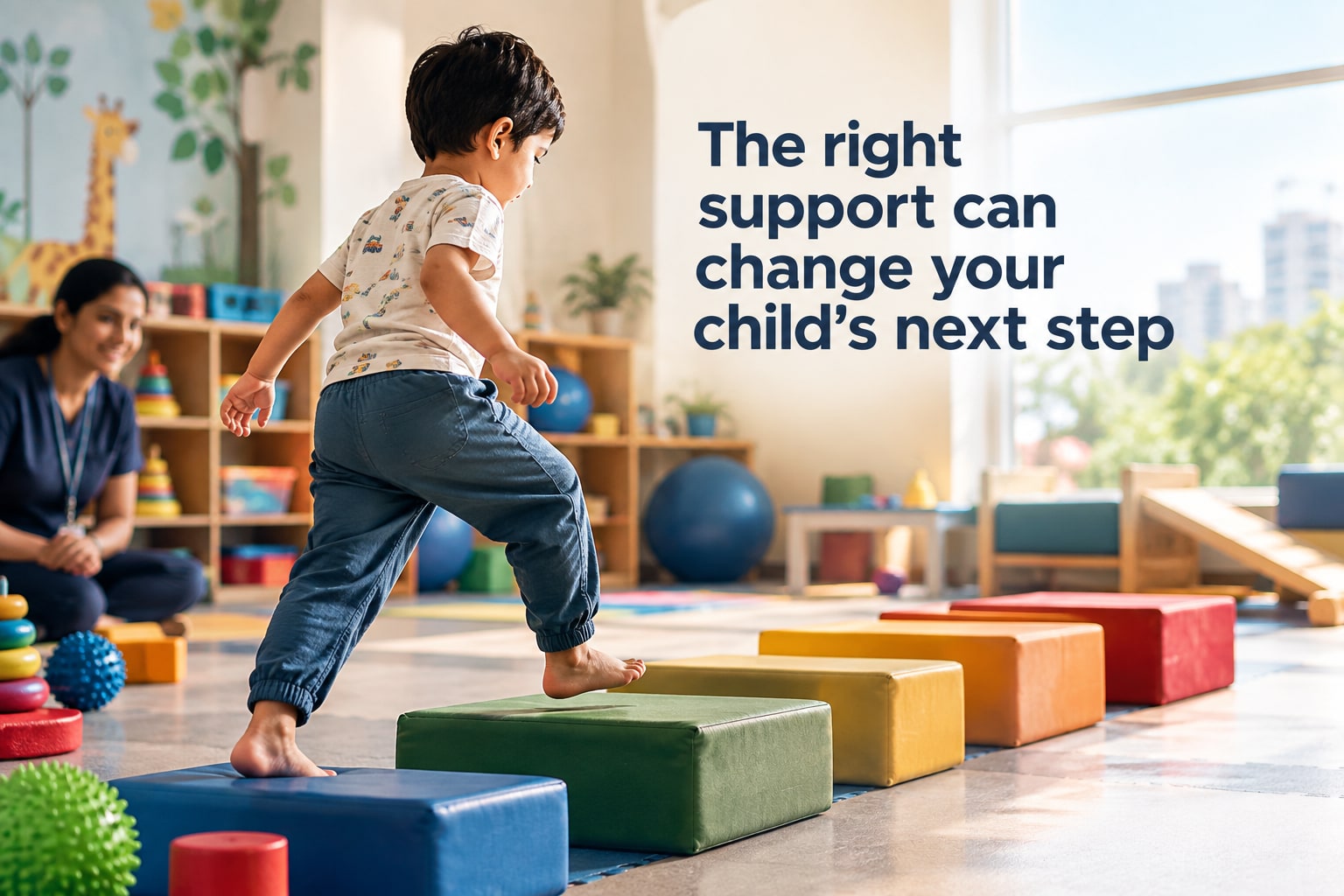
The value of special education depends on whether it improves a child’s communication, participation, safety, learning, and independence—not on a diagnosis alone. You will be able to identify when evaluation is more sensible than waiting, understand what support looks like at each age, and judge whether a Pune programme justifies its cost and effort.
Key takeaways
- Choose support that improves communication, routines, safety, or independence.
- Start assessment when developmental concerns affect daily activities or participation.
- Request measurable goals, review dates, and progress records from the programme.
- Adapt support when gains stall or goals no longer match your child’s needs.
When special education is worth pursuing for a young child
Special education is worth pursuing when it helps a child function more independently, not simply because a diagnosis exists. The commitment is easier to justify when support leads to concrete gains: communicating a need, following a routine with fewer prompts, tolerating transitions, playing with another child, eating safely, or completing a dressing or toileting step.
A programme that teaches you strategies for meals, bathing, shopping, and play offers more value than clinic-only sessions.
Seek an evaluation instead of waiting if your child shows persistent difficulty with:
- Understanding or using words, gestures, or other communication
- Eye contact, shared attention, imitation, play, or interaction
- Walking, hand use, coordination, feeding, or sensory regulation
- Hearing, vision, behaviour, sleep, attention, or emotional regulation
- Dressing, toileting, eating, following routines, or other daily tasks
Evaluation does not require a completed diagnosis. Waiting for a label can postpone useful support, including speech-language therapy, occupational therapy, physiotherapy, developmental therapy, parent coaching, or early special education.
| Option | Practical value | What to check |
|---|---|---|
| Parent-mediated support | Skills continue between sessions | You receive specific activities and targets |
| Clinic-only therapy | Concentrated professional treatment | Goals connect to home and preschool routines |
| Coordinated plan | Reduces duplicated or conflicting advice | Each professional owns a goal and review date |
For families asking “is special education worth it for young children Pune,” the strongest special education benefits for young children Pune are measurable progress, safer participation, and reduced dependence across everyday routines. Review results after an agreed period; vague claims such as “better attention” are not enough.
What support looks like from infancy through the preschool years
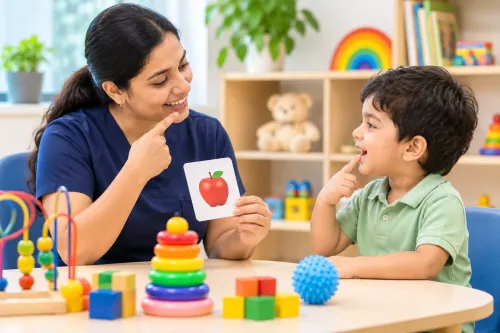
Special education for infants and toddlers in Pune is not a smaller version of school. It uses play and daily routines to build requesting, pointing, imitation, joint attention, movement, feeding, dressing, toileting readiness, early communication, and participation with other children. Goals are functional before they are academic.
| Support | What it means | What it looks like for a young child |
|---|---|---|
| Special education | Individualised teaching for learning, communication, adaptive skills, and participation | Teaching a child to choose between two items, follow a routine, or join group play |
| Early intervention | A broad service model for developmental concerns in the early years | Coordinating assessment, parent coaching, therapy, and education before school entry |
| Developmental therapy | Practice for broad developmental skills | Building play, imitation, attention, problem-solving, and everyday independence |
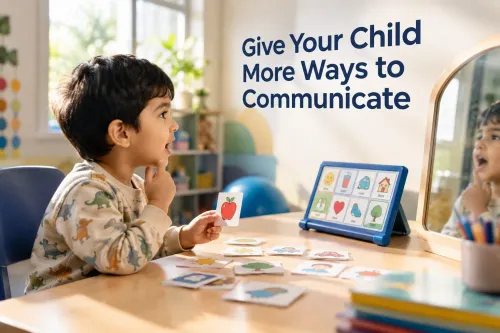
| Speech therapy | Assessment and treatment of communication, speech, language, or feeding difficulties | Expanding gestures, sounds, words, understanding, or use of pictures and AAC |
| Occupational therapy | Support for sensory processing, fine motor skills, self-care, and participation | Practising sitting, grasping, dressing, feeding, or tolerating everyday sensations |
| Mainstream preschool support | Adjustments within a regular preschool | Visual schedules, shorter activities, extra prompting, movement breaks, or a quieter space |
Early special education support in Pune works best when educators, therapists, medical professionals, and parents share goals. A plan should name who teaches each skill and how progress is measured at home and preschool. A child need not wait for a diagnosis, spoken language, or failed speech therapy before receiving support.
What happens in an assessment and the first support plan
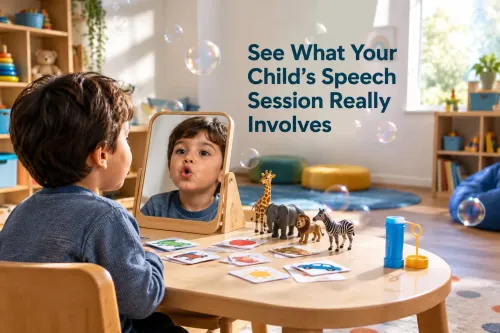
An initial assessment examines how the child functions in real activities, not only whether a diagnosis exists. A professional interviews caregivers, reviews medical and developmental history, checks hearing and vision information, and observes the child with people, toys, food, and everyday tasks.
The child’s age, interests, sensory responses, strengths, and support needs all shape the plan.
The team may record:
- Communication: sounds, gestures, words, understanding, requesting, imitation, and turn-taking.
- Movement: balance, walking, hand use, coordination, posture, and tolerance for physical activity.
- Play and learning: attention, joint attention, pretend play, problem-solving, and copying actions.
- Behaviour: transitions, regulation, sleep-related effects, distress triggers, and ways the child recovers.
- Feeding and self-care: chewing, utensil use, dressing, handwashing, toileting readiness, and safety.
Professionals then convert observations into baseline measures and functional goals.
“Improve communication” becomes “uses a word, sign, or picture to request a preferred toy in four of five opportunities.” “Improve independence” becomes “pulls up trousers after toileting with one verbal prompt on four consecutive days.” Each goal names the action, assistance level, setting, and review date.
A useful first plan assigns responsibility across special education, speech-language, occupational or physiotherapy input, and caregiver coaching. For families considering early special education support in Pune, parent practice during meals, bathing, shopping, and play is central to the special education benefits for young children in Pune.
How to tell whether a programme is producing useful progress
Useful progress is a change you can see in daily life, not a full calendar of completed sessions. Expect coordinated professionals to assign each goal, teach you strategies for meals, bathing, shopping, and play, and track whether your child uses skills with fewer prompts across home and preschool.
Measure gains against the full cost, not against therapy attendance alone.
| Check | Useful gain | Burden question | Interpretation |
|---|---|---|---|
| Communication | Requests, responds, or shares attention more independently | Is travel reducing sleep or family time? | Keep support when gains appear beyond the clinic. |
| Self-care and participation | Joins meals, dressing, play, or preschool routines | Does the schedule displace unstructured play? | Reduce adult-led time if participation worsens. |
| Generalisation | Uses the skill with parents, teachers, and siblings | Does the skill occur only with one therapist? | Ask for coaching and practice in ordinary routines. |
| Family capacity | Caregivers can use the strategy consistently | Are cost, leave from work, or fatigue becoming unsustainable? | Adapt frequency, location, or goals before stopping. |
Review the agreed measures at a defined date. A programme offering early special education support Pune families can use should show what changed, how often, and with how much help. The special education benefits for young children Pune families seek are stronger when communication, movement, behaviour, medical needs, and school participation are coordinated.
More sessions are not automatically better. Reconsider the plan if promised normal development has replaced practical goals, progress cannot be demonstrated, or sleep, school, play, and family functioning are deteriorating.
A practical Pune decision: choosing, reviewing, and adapting support
Choose a provider who can show qualifications, not just certificates. Ask whether the special educator is registered with the Rehabilitation Council of India, which professionals will assess your child, how they protect children, and how they measure progress. A credible plan names baseline skills, targets, session frequency, home practice, fees, and a review date.
For “is special education worth it for young children pune,” use an 8–12-week trial with dated observations: requests, transitions, play, eating, dressing, communication, and participation at preschool. A programme that teaches you strategies for meals, bathing, shopping, and play may deliver more value than one that relies only on clinic sessions.
For special education for infants and toddlers pune, goals should remain play- and routine-based, not worksheet-driven.
Ask the preschool or school for a written support plan under the Rights of Persons with Disabilities Act, 2016. Discuss visual schedules, extra transition time, accessible communication, a quieter seat, sensory breaks, and an individualised support plan; a diagnosis alone is not a reason to exclude a child.
SAVI CHILD DEVELOPMENT AND RESEARCH CENTRE PVT LTD can be one provider to compare by asking the same evidence and review questions you ask elsewhere.
| Review finding | Decision | What to do |
|---|---|---|
| Clear gains used at home and school | Continue | Keep goals and review monthly |
| Little gain or excessive burden | Change | Alter goals, method, provider, or frequency |
| No safe benefit after adjustments | Stop | Reassess with another qualified professional |
Related services
Special Education provides personalized learning and developmental support for children with different learning needs and abilities. View service → |
Early Intervention . Early Intervention Centre Services Can Make a Meaningful Difference The early years of childhood are a crucial period for learning and development. View service → |
Frequently asked questions
When is special education worth pursuing for a young child?
It is worth pursuing when support produces practical gains such as communicating needs, managing transitions, following routines, playing with others, eating safely, or completing self-care steps.
What does special education support look like for infants and preschool children?
Support can include individualized developmental assessment, communication work, sensory and motor activities, play-based learning, self-care practice, caregiver coaching, and structured preschool support.
What happens during an assessment and the first support plan?
Professionals review development, communication, play, movement, sensory responses, learning, and daily-living skills. They then set observable goals, choose interventions, and establish a review schedule.
How can parents tell whether a programme is producing useful progress?
Track specific changes across home, school, and community settings, including fewer prompts, better communication, smoother transitions, safer eating, and increased participation. Review the goals regularly and adapt support when progress stalls.