
A child who completes only the first step, copies classmates, waits during group work, or starts the wrong task is not necessarily refusing to cooperate. By separating language, attention, memory, motor, sensory, and emotional barriers, then testing performance with clear measures, you can choose support that improves participation at school and home.
Key takeaways
- Check comprehension, attention, memory, language, sensory, and motor barriers before changing support.
- Record the exact direction, prompts, delay, errors, and completed steps.
- Teach one direction at a time with visual cues, modelling, practice, and gradual fading.
- Use the same cueing language and visual sequence across home, classroom, and transitions.
Is the instruction unclear, or is another barrier blocking the response?
A child who completes only the first step may understand the instruction but lose the sequence, working memory, attention, or motor plan. A child who waits for peers, copies classmates, starts the wrong task, loses track after a transition, or responds to one-to-one prompts but not group directions needs closer observation—not an assumption of defiance.
1. Ask privately, “Show me the first step,” rather than “Did you understand?” If the child demonstrates the action after a short prompt, the barrier may be initiation, attention, anxiety, or task avoidance. If the child cannot explain or show what to do, investigate comprehension, communication, hearing, vision, or the wording itself.
2. Compare what happens after a spoken direction, a picture, a gesture, and an adult model. Note whether the child can start but cannot sequence, remember the next step, regulate attention, communicate a response, or complete the motor task. Waiting, copying, and wrong-task starts are useful clues.
3. Treat receptive-language difficulty, hearing or vision problems, attention or impulsivity, working-memory limits, developmental language disorder, autism-related communication differences, learning disorders, motor-planning problems, anxiety, and task avoidance as possible explanations. They can look identical in class.
“Cannot follow classroom instructions” is a functional description, not a diagnosis. Hearing and vision checks and a review of developmental history belong in the first review. Families searching for support for children who cannot follow instructions Pune should ask whether assessment separates these barriers before recommending intervention.
What should adults observe and measure before changing support?
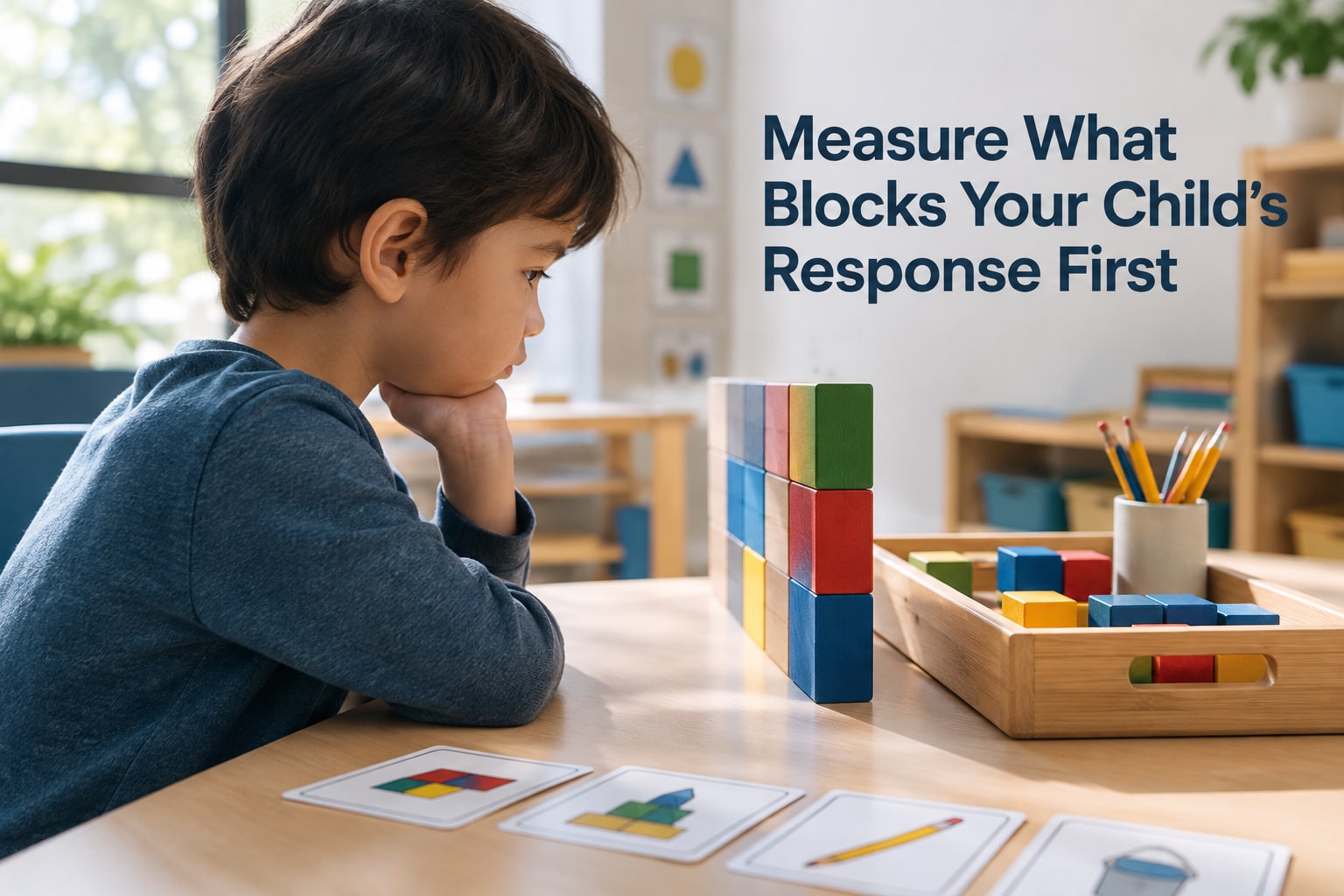
Test the direction in the classroom or a realistic learning setting, not only on a worksheet or IQ test. Give the instruction during an actual routine, then record the exact wording, number of steps, visual or gesture provided, response latency, error type, and repetitions needed.
Record whether performance changes with different adults, subjects, noise levels, transitions, and activities. Replace “Did you understand?” with “Show me the first step” or “Tell me what you will do first.” This reveals action, sequencing, and recall more accurately.
| - Spoken direction | Tests listening and comprehension without print demands | Note whether the child starts, waits, copies peers, or completes the correct steps |
|---|---|---|
| - Written direction | Adds reading, spelling, handwriting, and fine-motor demands | Compare performance before calling the problem poor comprehension |
| - Spoken plus visual cue | Shows whether a picture, gesture, or model improves access | Record the prompt type and whether the child still needs repetition |
| - Group direction | Tests classroom access under noise and competing attention | Compare with the same direction given privately by one adult |
Use a small baseline: follows a two-step classroom routine with no more than one visual prompt in four of five opportunities. Repeat it across people, subjects, and settings before changing support. Families searching for special education for learning difficulties pune can request these records rather than accepting “better attention” as a progress measure.
How can you teach a direction so the child can act on it?
Teach one action before you expect a routine. Gain attention, use the child’s name, give one concrete verb, remove extra words, and pause for processing. Do not bundle commands while the child is still learning.
1. Start with a one-step direction: “Take out the pencil.” Ask the child to demonstrate, rather than answer “yes” to “Do you understand?” Give immediate, specific feedback: “You took out the pencil after one direction.” Add a gesture, picture, model, or physical prompt when needed.
2.
Use task analysis for “complete your worksheet”: “Take out the pencil; write your name; answer questions one to three; place the sheet in the finished box.” Teach each observable action, then join two steps: “Take your book and sit down.” Move to three steps: “Get your notebook, copy the date, and open to page five.”
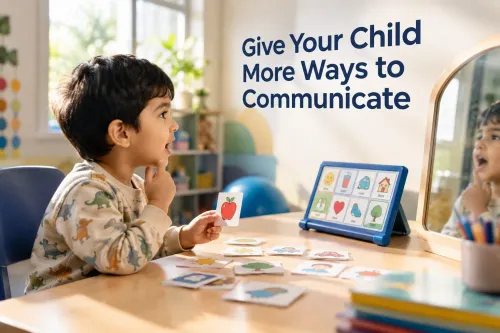
3. Make the sequence visible with a picture schedule, illustrated task strip, written checklist, colour coding, first-then board, timer, gesture, or adult model. Teach the child to check each step and identify the finished point.
Plan prompt fading: reduce verbal, picture, model, gesture, and physical help instead of repeating the same cue indefinitely. Track a target such as two steps with no more than one visual prompt in four of five opportunities.
Families searching for “support for children who cannot follow instructions pune” can ask whether a plan includes measurable teaching and prompt fading.
How should teachers and parents carry the skill across the school day?
Keep the learning goal unchanged while changing how the child reaches it. Seat the child near the instruction, give a two-minute warning before transitions, and repeat directions privately instead of correcting the child publicly. Reduce copying demands, allow extra response time, and chunk worksheets into short sections.
1. Use the same routine across adults: gain attention, give one clear direction, show the visual step, pause, and ask the child to demonstrate the first action. Apply it to taking out classroom materials, washing hands, packing a bag, moving between activities, and starting homework.
2. Keep the response flexible. Let the child point, select an answer, speak, type, or show the answer with materials when writing or speech is not the learning goal. An alternative response demonstrates knowledge; it does not make the academic target easier.
3. Practise the routine with parents and teachers, then move beyond a quiet practice room. Test it during noisy transitions, different subjects, unfamiliar adults, and less-supported activities; success in therapy does not guarantee classroom generalisation.
4. Review data across people, subjects, and settings. Define progress as an observable target, such as “follows a two-step classroom routine with no more than one visual prompt in four of five opportunities,” rather than “better attention.”
Families seeking special education for children struggling with classroom instructions Pune should ask every provider and school team to use the same cues, response options, and recording method. That consistency reveals whether the skill travels across the school day.
How do you choose and monitor special-education support in Pune or Wanowrie?
Choose support that can show what the child does now and what will change next. Ask every provider for:
- A written baseline, such as following a two-step routine with one visual prompt in four of five opportunities
- Measurable goals and the exact prompt level: verbal, picture, gesture, modelling, or physical
- A prompt-fading plan, classroom carry-over arrangements, and a review date
- The special educator’s qualification or professional registration, verified through the Rehabilitation Council of India; “remedial teacher” and “learning therapist” are not credentials by themselves
| Professional | What to examine | When it applies |
|---|---|---|
| Speech-language professional | Comprehension and language formulation | The child misunderstands words, questions, or sentence structure |
| Occupational therapist | Sensory, motor, and classroom-function demands | The child struggles with writing, organisation, movement, or regulation |
| Psychologist or developmental paediatrician | Attention, emotional, developmental, or neurodevelopmental factors | Performance varies sharply or broader concerns are present |
| Special educator | Classroom-access skills and progress data | The child needs instruction, practice, and monitoring |
A multidisciplinary plan works when each role is written down rather than bundled under one label. A centre such as SAVI CHILD DEVELOPMENT AND RESEARCH CENTRE PVT LTD is worth comparing when its assessment, goals, professional roles, and school-coordination process are documented.
Treat rapid-cure claims, one-method-fits-all promises, and progress claims without baseline data as warning signs. Families searching for a special educator for child learning problems Wanowrie or special education for learning difficulties Pune should compare evidence, not locality-based marketing.
Related service
Special Education provides personalized learning and developmental support for children with different learning needs and abilities. View service → |
Frequently asked questions
How can adults tell whether an instruction is unclear or another barrier is blocking the response?
Observe whether the child understands key words, attends to the speaker, remembers the sequence, starts independently, and responds differently to one-to-one and group directions.
What should adults measure before changing classroom support?
Record the direction given, setting, number of steps, waiting time, prompts used, errors, completed steps, and whether the child succeeds with visual or individual support.
How do you teach a direction so a child can act on it?
Break the task into manageable steps, use clear language and visual cues, model the action, practise it, and gradually reduce prompts as independence improves.
How should teachers and parents carry instruction-following skills across the school day?
Use consistent words, visuals, prompting, and feedback across lessons, routines, transitions, home practice, and different adults.
How do you choose and monitor special-education support in Pune or Wanowrie?
Ask for an individual assessment, specific goals, measurable progress indicators, a review schedule, and coordination between the special educator, family, and school.