
Many families associate special education only with intellectual disability or a separate school, but it is specialized teaching for children who need changes in instruction, communication, materials, participation, or assessment. You will learn how to recognise a possible need, distinguish educational support from therapy or tutoring, and judge whether a plan is practical and measurable.
Key takeaways
- Special education adapts teaching so children can access academic and functional learning.
- Children with developmental, communication, sensory, learning, or daily-living needs may benefit.
- Request assessment findings, measurable goals, teaching methods, and review dates in the learning plan.
- Review progress using work samples, skill data, classroom observations, and family feedback.
What Special Education Changes in a Child’s Learning
Special education for children is specialized instruction that gives a child access to academic and functional learning. It changes how teaching is delivered when disability, developmental differences, or learning difficulties make ordinary instruction inaccessible.
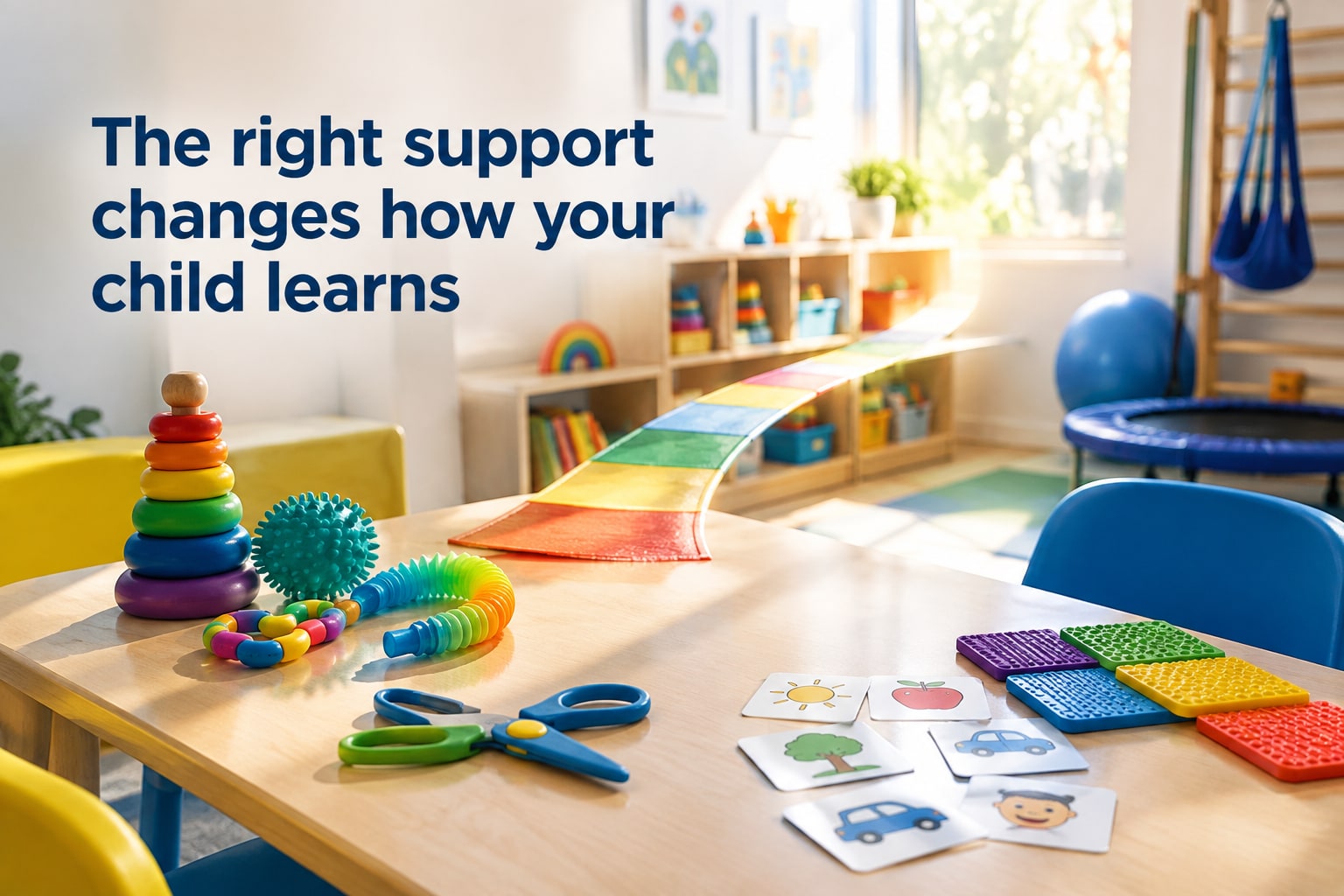
Support may take place in a mainstream classroom, a resource room, or a specialized setting. The changes can include:
- Breaking a task into smaller steps
- Using adapted books, worksheets, or writing tools
- Providing pictures, signs, communication books, or speech-generating devices
- Adjusting assessments, such as allowing oral answers or fewer items
- Allowing additional processing time
Ordinary teaching presents the curriculum to the class. Tutoring usually adds practice using the same teaching approach, while remedial teaching targets a defined academic gap, such as weak phonics or number skills. Special education changes the instruction itself and may address both schoolwork and functional skills such as following routines, communicating needs, or working independently.
Therapy has a different primary target. Speech-language therapy addresses communication; occupational therapy addresses participation, sensory processing, fine-motor, or daily-living skills; and physiotherapy addresses movement. These services can support learning but do not replace specialized teaching.
Childcare provides supervision, safety, routines, and care. It is not planned instruction with measurable learning goals. Special education is appropriate when a child needs deliberate changes to learn, participate, communicate, or demonstrate knowledge—not simply more time in care or more worksheets.
Who May Need Special Education Support
Who needs special education? Any child whose disability, developmental profile, or persistent learning difficulty limits access to academic or functional learning may benefit.
This includes children with autism, intellectual disability, dyslexia and other specific learning disabilities, developmental delay, speech and language difficulties, ADHD-related attention or executive-function barriers, hearing or vision loss, physical or motor impairments, and multiple disabilities.
Look for support before school failure when a child repeatedly:
- Struggles to understand instructions, learn letters or numbers, communicate needs, complete age-expected tasks, join groups, regulate attention, or keep pace despite appropriate teaching.
- Needs unusually frequent prompts, cannot show skills independently, or performs very differently at home, school, or during structured tasks.
- Avoids reading, writing, mathematics, conversation, movement, or group activities because the task demands exceed current access skills.
A developmental delay means skills are emerging later than expected; it does not automatically establish a lifelong disability. A diagnosed disability identifies a condition, while a temporary learning gap may follow missed teaching, illness, language change, sleep problems, or emotional stress.
A child may also need only a different teaching method, clearer instructions, adapted materials, or more processing time.
You do not need a diagnosis or a 40% benchmark-disability certificate before discussing educational support. Functional difficulty across real tasks matters: what the child understands, communicates, completes, and manages independently. Assessment can clarify the cause and the teaching changes required.
What an Assessment and Individual Learning Plan Should Contain
A team turns assessment findings into an actionable plan by comparing what a child does independently with the support needed across home, school, and therapy settings. Assessment should examine:
- Developmental history, communication, cognition, and academic skills
- Attention, executive functioning, behaviour, and emotional regulation
- Adaptive and daily-living skills, including dressing, eating, toileting, and following routines
- Sensory and motor factors, including fine-motor control and physical access
- Hearing and vision, with medical review when concerns affect performance
- Classroom functioning across subjects, activities, adults, peers, and environments
One IQ score, school mark, or informal observation cannot define an educational plan. A high score can hide difficulty with language, attention, or daily functioning; a low mark can reflect poor access, hearing loss, absence, or an unsuitable teaching method.
The individual education or learning plan should specify:
- Observable baseline skills
- A small number of priority goals
- Teaching methods and accommodations
- Frequency, duration, and setting
- The responsible teacher, specialist, or caregiver
- Progress measures and review dates
“Improve concentration” is too vague. A measurable target might require the child to complete a 10-minute sorting task with 80% accuracy, no more than one verbal prompt, across four of five opportunities.
Record accuracy, independence, prompting, participation, and whether the skill appears at home and school; if progress stalls, review the goal, method, communication access, attendance, and hearing, vision, medical, or emotional factors.
How Special Education Works in Class and Alongside Therapy
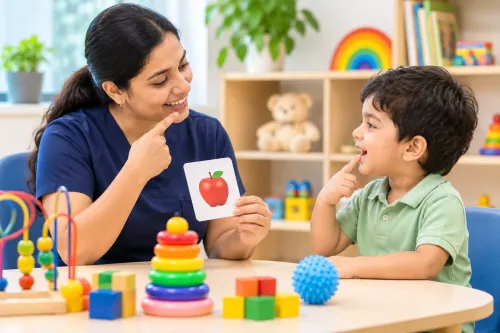
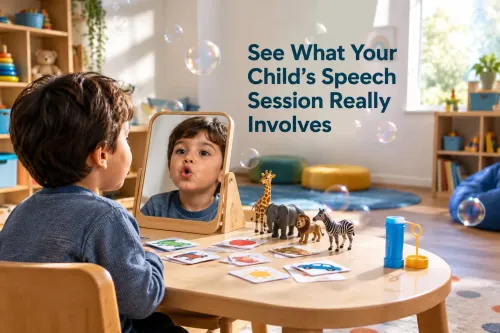
A special educator turns a child’s learning goals into teachable steps, then adjusts the environment so the child can participate. A lesson may use a visual schedule, predictable routines, chunked instructions, multisensory literacy teaching, repetition, adapted worksheets, accessible seating, and extra processing time.
Useful classroom supports include:
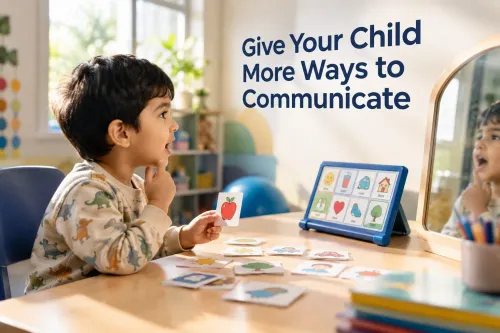
- Pictures, gestures, signs, communication books, or speech-generating devices for choices, needs, comments, and refusals
- Adapted writing demands, such as tracing, selecting answers, typing, or dictating
- Explicit teaching of turn-taking, requesting help, joining a group, and managing disagreement
- Practice across real activities, rather than teaching a skill only at a table
Alternative and augmentative communication does not stop speech development. It gives the child a reliable voice while spoken communication continues to develop when possible.
Inclusive education means removing barriers, not placing a child in a regular classroom without support. A child may learn in a mainstream class, resource room, or specialised setting, depending on which arrangement enables participation and progress.
| Role | Main responsibility |
|---|---|
| Special educator | Access to academic and functional curriculum |
| Speech-language therapist | Communication, language, and speech |
| Occupational therapist | Participation, fine-motor, sensory, and daily-living skills |
| Physiotherapist | Movement and physical access |
| Counsellor | Emotional or behavioural needs |
Coordinate these services around arrival, classroom work, play, meals, toileting, transitions, and homework. Families comparing special education for children Pune services or special education Wanowrie should ask whether professionals share goals, prompting strategies, and progress records instead of delivering unrelated sessions.
How to Choose and Review Special Education in Pune or Wanowrie
Compare the plan, not the number of sessions. For families searching “special education for children Pune” or “special education Wanowrie,” ask these questions before enrolling:
| Check | Ask for | Why it matters |
|---|---|---|
| Functional assessment | Does the team observe communication, daily-living, academic and classroom skills across settings? | A single IQ score, school mark or informal observation cannot define support. |
| Goals and teaching | Are goals measurable, and can the educator explain the teaching method? | “Improve concentration” is weaker than a target stating accuracy, prompts and independent attempts. |
| Coordination | How will the provider share goals with school staff and therapists? | Coordinated practice helps skills transfer into real routines. |
| Progress records | Do records show prompt level, accuracy, independence, communication and participation? | Attendance alone does not demonstrate learning. |
| Reviews and transitions | When is the formal review, and how will support reduce as independence grows? | A programme should prepare the child for greater responsibility. |
Also ask who delivers the programme, their qualifications, and whether Rehabilitation Council of India registration applies. Request registration details rather than relying on labels such as “special educator” or “remedial expert.”
Progress means better accuracy, independence, communication, participation, generalization at home and school, and maintenance after teaching reduces. If progress stalls, the team should review the goal, task demands, communication access, teaching method, hearing, vision, medical issues, attendance, sleep and emotional factors.
SAVI CHILD DEVELOPMENT AND RESEARCH CENTRE PVT LTD is one Wanoworie option for families seeking coordinated child-development and educational support; its location alone does not prove quality.
Related service
Special Education provides personalized learning and developmental support for children with different learning needs and abilities. View service → |
Frequently asked questions
What is special education for children?
Special education is individualized instruction that adapts teaching, materials, communication, pace, and assessment so a child can access academic and functional learning.
Who needs special education?
Children may need special education when disability, developmental differences, communication needs, sensory needs, learning difficulties, or daily-living challenges make ordinary instruction inaccessible.
What should an individual learning plan contain?
It should contain the child’s assessment findings, current skills, measurable academic and functional goals, teaching strategies, accommodations, progress measures, responsibilities, and review dates.
How do you choose special education support in Pune or Wanowrie?
Ask about staff qualifications, assessment methods, individual planning, classroom or therapy coordination, progress reporting, family involvement, session frequency, and how plans are reviewed.