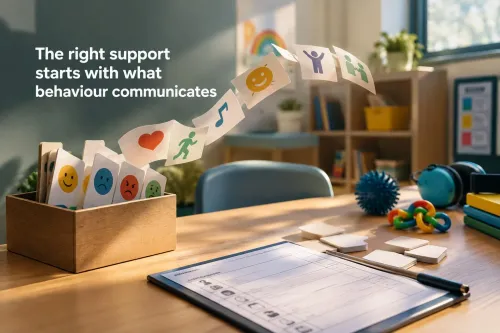


A first visit should turn concerns about learning, communication, behaviour or daily routines into observable goals, not a generic package of exercises. You will know what to expect from intake through follow-up, what evidence to request, and how to judge whether support is transferring to home and school.
Key takeaways
- Ask for measurable goals, baseline skills and a review date.
- Expect assessment, structured activities, prompting and recorded responses.
- Confirm which professional handles teaching, communication, sensory or behaviour goals.
- Share home and school observations so the plan reflects daily life.
What happens before and during a special education session?
The session starts before teaching: the practitioner gathers information, identifies the child’s current abilities and selects goals that can be measured.
1. A special education session Pune families arrange begins with developmental, medical and educational history. The practitioner asks about communication, learning, health, routines and previous support, then observes play, attention, self-care, academic work and social interaction.
2. The practitioner records strengths and baseline performance. This might include words used, letters read, numbers recognised, writing completed, time attending, classroom-readiness skills, independent dressing or toileting, and ways the child joins or responds to others.
3. The team chooses a small number of measurable goals for the individualized education session. Goals may target reading, writing, numeracy, communication, attention, self-care or social participation, and progress is compared with the child’s own baseline—not with a typically developing classmate.
4. Teaching is adapted to how the child learns. The special educator may break reading or dressing into steps, use a visual schedule, concrete counting materials, adapted writing demands, repetition, or an alternative response such as pointing, choosing pictures or using communication technology. Sessions are not limited to worksheets.
5. The session ends with feedback and a follow-up plan. The practitioner explains what was practised, which prompts helped, what to repeat at home or school, and when goals or teaching methods will be reviewed.
How is behaviour therapy planned and measured?
A behaviour plan starts with one observable target, not a label such as “naughty” or “uncooperative.” The special school behaviour therapy process might target requesting help, waiting, transitioning, following a two-step instruction, staying seated, toileting or reducing hitting.
- Define the behaviour in measurable terms, such as “hits another person” rather than “becomes aggressive.”
- Record frequency, duration, latency before the child starts, prompt level, and what happens immediately before and after the behaviour.
- Use this functional assessment to change triggers or task demands, then teach a replacement communication or coping skill.
- Reinforce the useful response and gradually fade verbal, gesture, model and physical prompts.
A child who hits when unable to request a break may learn to show a break card, while adults reduce an overwhelming demand and reward the request. The data should show whether responses become independent, not merely whether the child appeared cooperative.
Punishment, humiliation, threats and forced compliance do not explain the behaviour or teach a safer alternative. They can increase fear, conceal distress and damage trust. A safety plan is essential when behaviour creates a risk of injury; it should identify warning signs, prevention steps, protective responses and who contacts the family or emergency support.
Review the plan across the therapy room, home and school. A skill is not fully established if the child uses it only with one therapist, one set of materials or constant prompting.
Which professional provides which kind of support?
A diagnosis does not assign a fixed therapy programme. The right professional depends on the skill or barrier identified, and special needs learning support Pune families seek may involve several roles working toward separate, measurable goals.
| Professional or support | Main focus | Typical contribution |
|---|---|---|
| Special educator | Learning access and prerequisite skills | Breaks academic, communication, daily-living and classroom tasks into teachable steps; adapts materials and response methods |
| Behaviour therapist | Observable behaviour and replacement skills | Uses functional assessment and data to teach requesting, waiting, transitions, coping or safer alternatives |
| ABA framework | Skill teaching and behaviour analysis | Provides structured teaching and measurement within a programme; ABA is not automatically required because of a diagnosis |
| Speech-language therapist | Communication, language, speech and related feeding concerns | Assesses understanding, expression, social communication, speech sounds, fluency and feeding-related needs |
| Occupational therapist | Functional participation, motor and sensory-motor needs | Works on self-care, fine-motor tasks, regulation, coordination and participation in routines |
| Teacher or classroom support | Access in school | Adjusts instructions, materials, seating, time, task size and assessment or response method |
Coordination prevents duplicated work. A psychologist can assess development, learning, emotional or behavioural factors; a medical professional can investigate hearing, sleep, seizures, medication or other health issues. The special educator, speech-language therapist, occupational therapist, teacher and family then share observations and align cues, goals and safety plans across settings.
Therapy should build independence, not simply produce quiet compliance.
What should you expect at the first appointment in Pune?
A first appointment should clarify fit, not pressure you to enrol. For families asking “what happens in special education behaviour therapy pune,” the provider should explain who may attend, how the child will be assessed, and what happens after the visit.
A parent or caregiver should attend; the child, teacher or another therapist can join when their input helps.
Bring:
- Developmental and medical reports, assessments, medication details and school work
- A description of the child’s typical daily routine
- Videos or written notes about target behaviours
- Teacher observations, including triggers, successful supports and classroom difficulties
Ask how long the assessment and regular sessions last, how many sessions occur weekly, whether work is individual or in a small group, and what fees include. Also ask who supervises the programme, how cancellations are handled, when goals are reviewed, and how progress is recorded.
Pune has no single mandated session timetable. Duration, frequency, group size and fees depend on the provider and the child’s needs, so get the format in writing before enrolment.
| Option | What to compare | Useful question |
|---|---|---|
| Special education | Learning and daily-living goals | How will baseline skills be measured? |
| Behaviour therapy | Target behaviour and replacement skill | What data will you record? |
| Multidisciplinary care | Team roles and coordination | Who reviews the combined plan? |
Ask about qualifications and check regulated rehabilitation professionals through the Rehabilitation Council of India’s registration system. You can compare SAVI CHILD DEVELOPMENT AND RESEARCH CENTRE PVT LTD with other Pune providers by intake process, team roles, goal records, parent communication and review schedule—not promises of a fixed cure.
Related services
Special Education provides personalized learning and developmental support for children with different learning needs and abilities. View service → |
ABA Therapy Applied Behavior Analysis (ABA) Therapy is a personalized approach that helps children develop important communication, social, learning, and... View service → |
How do parents, schools and therapists know the plan is working?
A review is useful only when it compares the child with the child’s own baseline. The team should meet periodically, not rely on impressions from one successful session or say only that the child was “cooperative.”
A useful review shows:
- Baseline and current frequency, duration, latency, task completion, percentage of independent responses and prompt level.
- Performance across people and settings, including the therapy room, home and classroom.
- A few realistic home strategies, such as the same visual cue, request format, waiting routine or reinforcement system. Parents report what fits their household; they are not expected to become full-time therapists.
- Teacher observations and reasonable accommodations under the Rights of Persons with Disabilities Act, 2016, including adapted materials, extra processing time, visual instructions or alternative ways to respond.
- A clear decision to retain, modify, generalise or stop each goal when the evidence supports it.
This follow-up is part of good special needs learning support Pune families can seek, whether the child attends a mainstream or special school. An individualized education session should connect with classroom demands rather than operate as an isolated service.
Treat vague claims, no recorded data, no safety plan, refusal to explain prompts and promises to permanently cure autism, intellectual disability, ADHD or another developmental condition as warning signs. A credible team explains what changed, what remains difficult and what it will measure next.
Frequently asked questions
What happens before and during a special education session?
The practitioner reviews the child’s abilities, selects measurable goals, prepares activities and records responses during structured teaching. Activities may target communication, literacy, numeracy, attention, self-care or classroom readiness.
How is behaviour therapy planned and measured?
The therapist defines the behaviour in observable terms, identifies triggers and consequences, chooses a replacement skill, and records frequency, duration or successful responses. Reviews compare new data with the starting baseline.
Which professional provides which kind of support?
Special educators address learning, academic and functional skills. Behaviour therapists work on observable behaviours and replacement skills. Speech-language therapists address communication, while occupational therapists address sensory processing, motor skills and daily activities.
What should you expect at the first appointment in Pune?
Expect a parent interview, developmental and educational history, discussion of concerns, observation of the child and an initial assessment. Bring school reports, therapy records, medical documents and examples of homework or behaviour patterns.
How do parents, schools and therapists know the plan is working?
They review dated records against the baseline, check whether skills transfer to home and school, and adjust goals when progress stalls. Useful measures include independent task completion, communication attempts, time engaged and behaviour frequency.